
Are swim ‘toys’ really necessary to improve swim performance?
Below I’ve listed 5 key pieces of equipment and how to use them within a session to improve technique and performance.
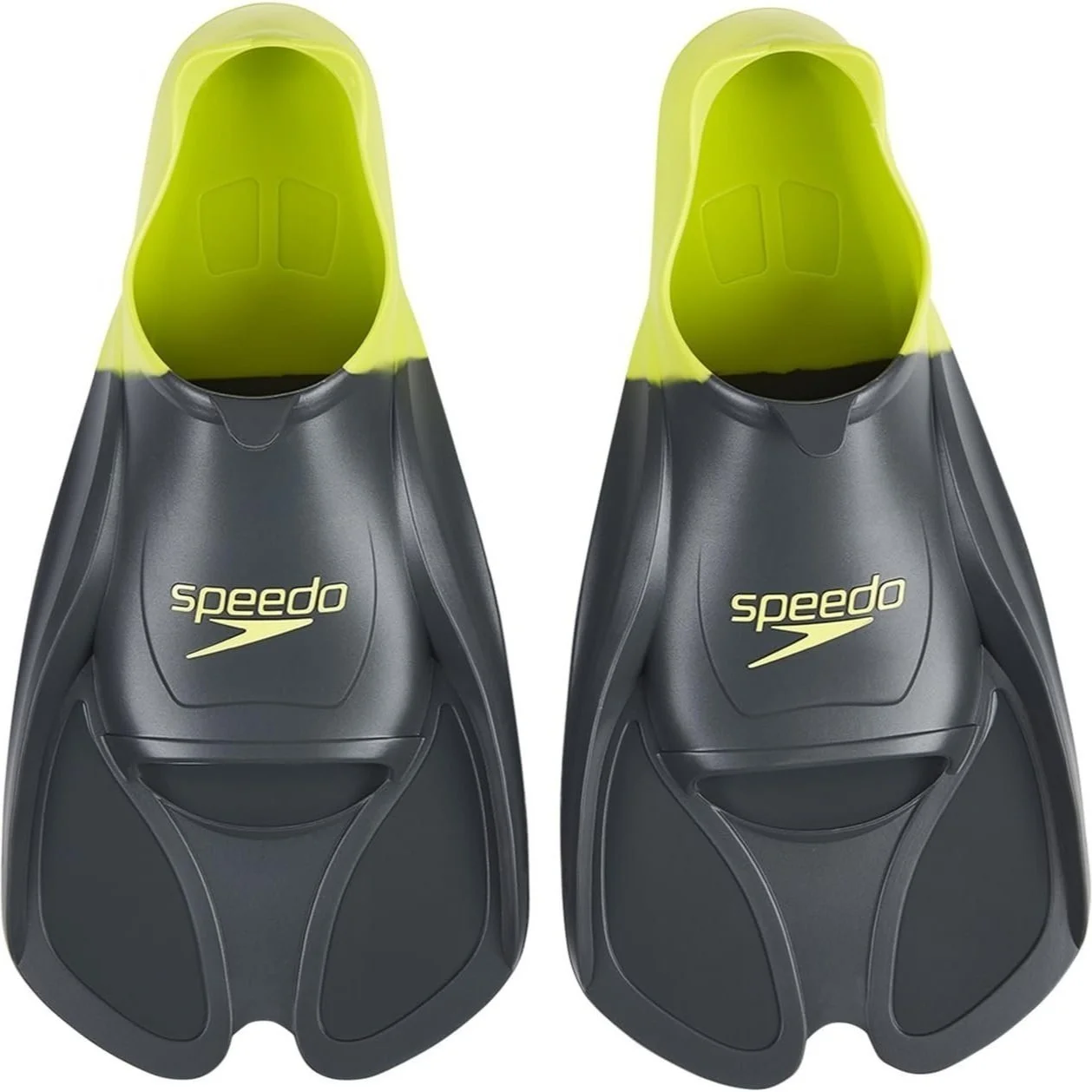
Why use fins?
There are three main benefits of using fins:
To support prolusion during more demanding drills.
If you have poor ankle flexibility (as most runners and triathletes do!) wearing fins during drills such as; side kicks, 6-1-6 and 6-3-6, will support your body position and propulsion allowing you to focus on the main outcomes of these drills i.e correct rotation or ‘hip roll’.
To develop kick technique
The most beneficial kick for endurance swimming is a short and fast flutter kick with the power generated from the hips and glutes rather than the knees. When using fins you will soon know if you are incorrectly kicking from your knees as you send water flying into the air! Fins support you to focus on the smooth flutter kick with ankles barely breaking the surface of the water gaining a feel for both the up and down stroke.
Build strength and endurance
Fins increase drag and force you to kick both the down stroke and up stroke with enhanced power, leading to neuromuscular adaptations which is a fancy way of saying your muscles learn how to move (contract) to produce powerful strokes in the water. You also undoubtably move further faster, allowing you to cover greater distances and increase endurance.
Suggested Set:
4 x 150m with 40-seconds rest, all using fins:
1) Side kick up the pool – Full FC (front crawl) stroke down the pool
2) 6-1-6 up the pool – Full FC stroke down the pool
3) 6-3-6 up the pool – Full FC stroke down the pool
4) Broken Arrow up the pool – Full FC stroke down the pool
20 x 25m FC swim FAST with 20-seconds rest
10 x 50m FC swim FAST with 40-seconds rest
2) Paddles
What are paddles?
There is a HUGE variety of paddles out there, each with a different function. Start simple with these Zone 3 Ergo hand Paddles.
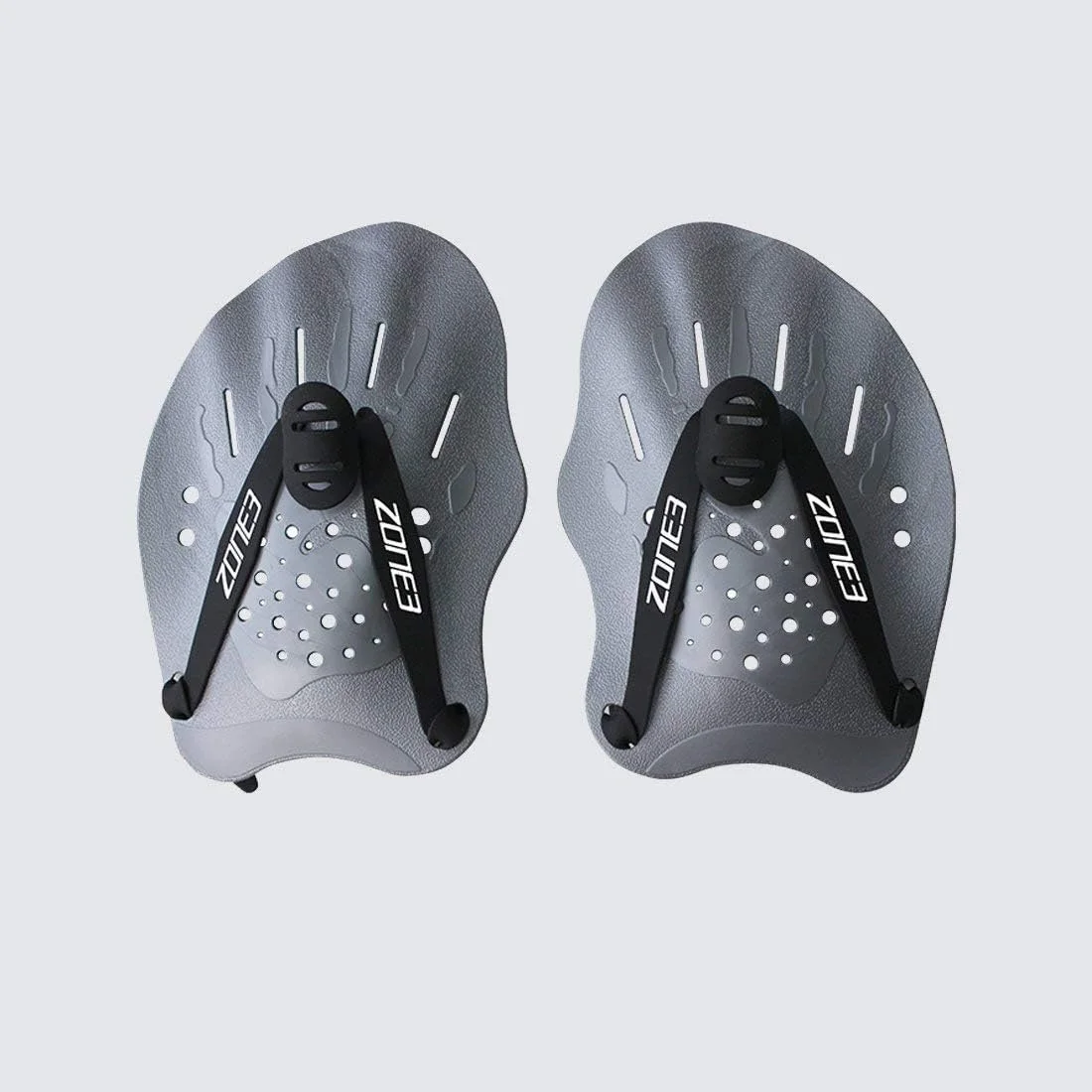
Why use paddles?
In simple terms, paddles create a larger surface area and so require you to pull with greater force. This leads to improvements in muscles strength. Paddles are best used to promote correct hand entry and ‘catch’ phase. You will feel if your hand is entering the water incorrectly as the paddle will bounce on the waters surface. You will gain the feel for the optimal catch position, focusing on hand below wrist, below elbow, below shoulder.
Suggested Session:
Perform 50m without paddles:
Count your number of strokes and your time – add them together to get your swim score.
3 x 50m try and reduce your score (you’ll need to swim faster with less strokes)
8 x 50m with paddles – 15-seconds rest (7/10) focus on the catch and reach
Repeat 3 x 50m again and see if you can now further reduce your score
3) Finis Tech Toc
What is the Tech Toc?
I recommend the FINIS Tech Toc.
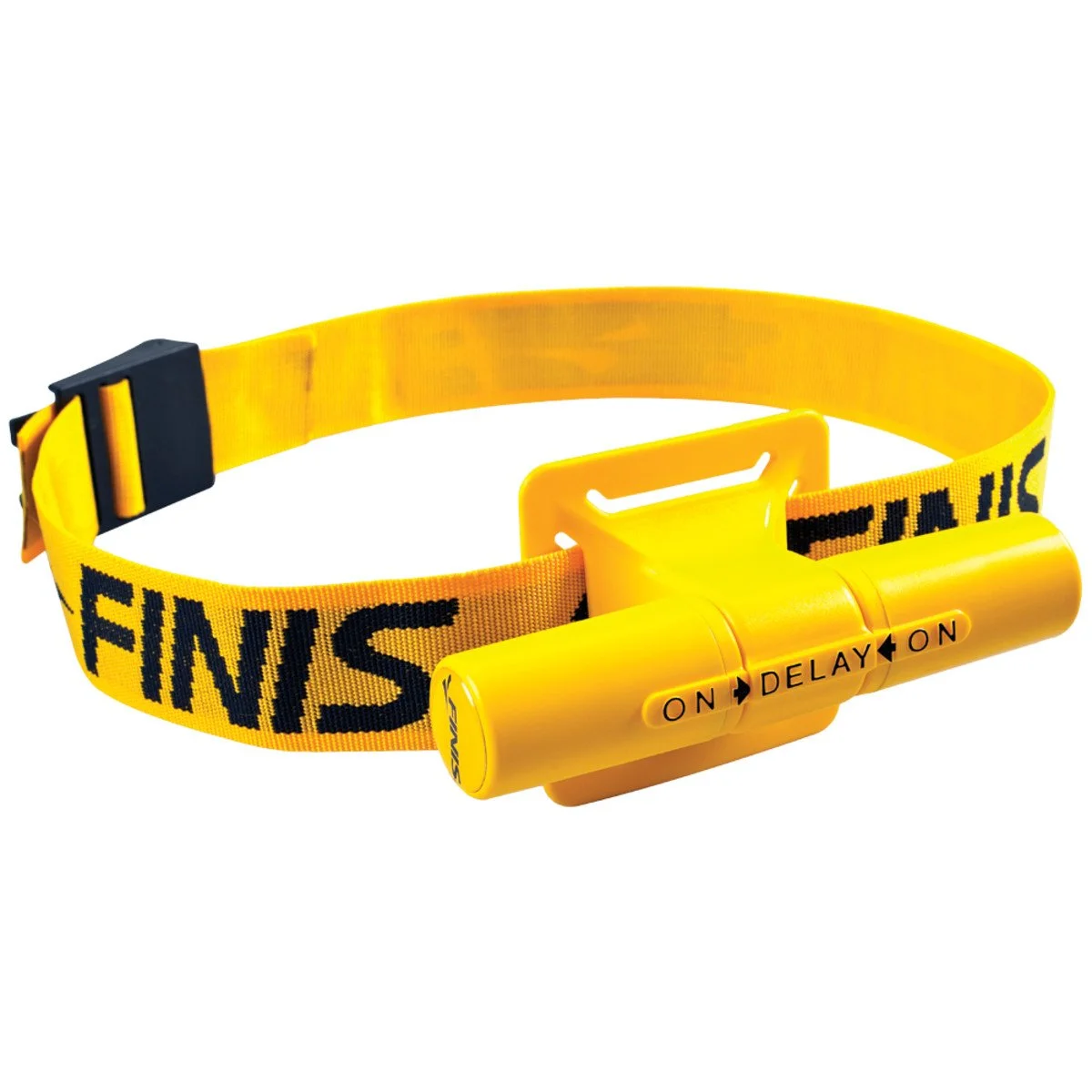
Why use the Tech Toc?
This hip rotation training tool has been revolutionary with the athletes I coach. Rotation is important to remain streamlined throughout the stroke cycle and gain maximum reach with each stroke. This toy ties around your waist and utilises a ball bearing in a plastic capsule and acoustic amplifiers to create a sound as the device is tipped from side to side. This audible feedback prompts proper hip rotation and undulation.
Suggested Session:
5 x 200m with 1-minute rest all with the Finish Tech Toc as:
1) FC swim
2) 6-1-6 up the lane – Full FC stroke back (Use Tech toc and Fins)
3) FC swim (Use Tech toc)
4) 6-3-6 up the lane– Full FC stroke back (Use Tech toc and Fins)
5) FC swim without Tech Toc and Fins
4) Finis Tempo Trainer
What is a Tempo Trainer?
I recommend the FINIS Tempo Trainer.
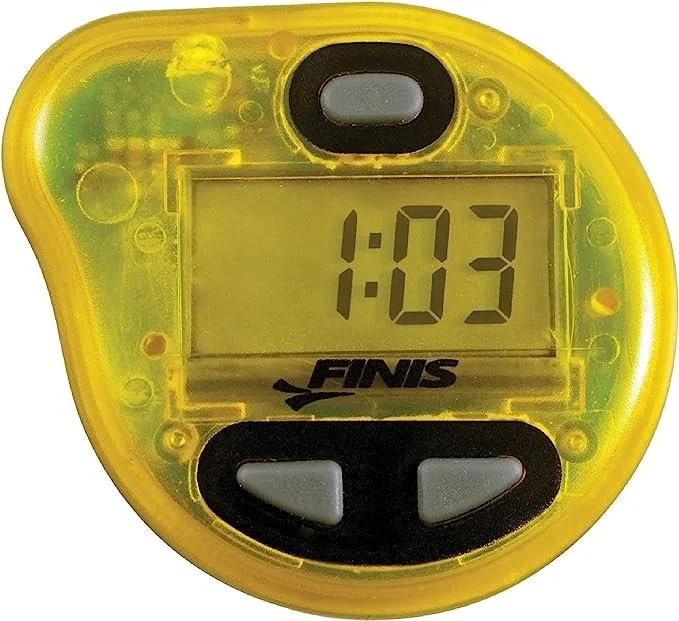
Why use the Tempo Trainer?
This small, waterproof device sits underneath your swim cap and provides an audible ‘beep’ when you should be reaching the end of the lane at your target pace. This is brilliant for setting target paces during endurance sets, practicing race pace and pushing yourself outside your comfort zone.
I use it to complete the Step Test with my athletes, to assess and monitor training zones. If you have the ability to record heart rate and Rating of Perceived Exertion (RPE) scale, you can do the same.
Suggested Session:
Step Test:
Following a good 10-minute warm up and 5-minute stationary rest complete:
7 x 200m with slowest pace first moving up to the final 200m at PB pace eg; 1st 200m = PB +24 secs, 2nd 200m = PB +20 secs, 3rd 200m = PB +16 secs, 4th 200m = PB +12 secs, 5th 200m = PB + 8 secs, 6th 200m = PB pace, 7th 200m = PB pace
Following each 200m allow 2 – 3-minutes rest and record heart rate and RPE.
Results can be plotted on a graph to estimate aerobic and anaerobic thresholds.
5) Drag Shorts
What are drag shorts?
I recommend FINIS Drag Suit.
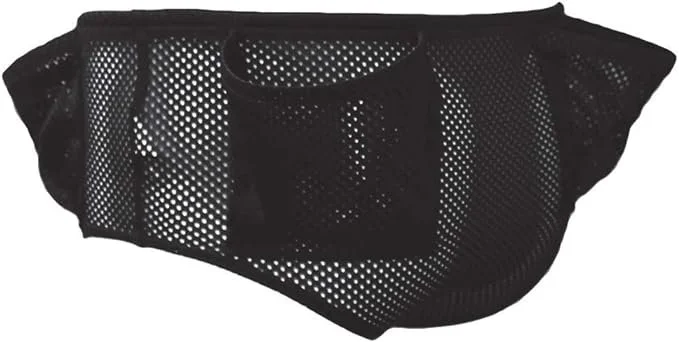
Why use drag shorts?
Drag shorts/suit add resistance and therefore extra load to your swimming sets. This will help you to build strength and power in your stroke, and can be a useful (and fun!) tool for those who feel they are stuck in a rut with their swim pace. The short’s should add between 10 - 5 seconds per 100m of difficulty.
Suggested Set:
4 x 100m FC swim (7/10 effort, 20-seconds rest)
4 x 100m FC swim with drag shorts (7/10 effort, 20-seconds rest)
4 x 100m FC swim drag shorts and paddles (7/10 efforts, 20-seconds rest)
4 x 100 FC swim improve times from set 1 (7/10 effort, 20-seconds rest)